
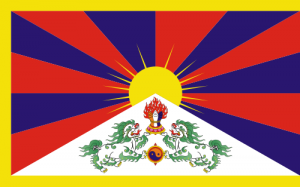
 Hidden behind the majestic Himalayas and rising nearly 5 km. above sea level, Tibet is a land unlike any other country with a magical realm of vast open spaces, clear light and pure color, dominated by intense blue sky. While other remote corners of the world fell to inevitable modernization, this vast mountain-locked land was left for centuries to develop a unique civilization of its own on the “Roof of the World”. Isolated by formidable barriers and guarded by its government, the Tibetan capital of Lhasa was truly a “Forbidden City”. Few westerners met the challenge, but the tales they returned with tantalized the imagination of the world.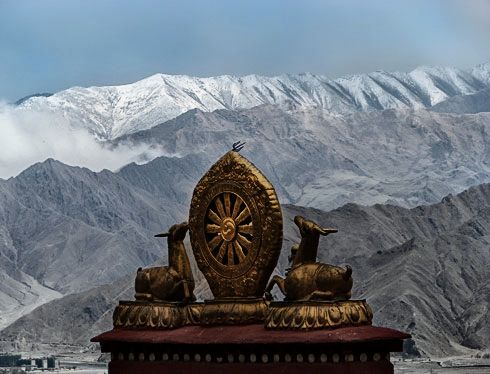
Tibet was the epitome of all that was magical, mysterious and unknown. A century ago, a visit to Tibet required strength, courage and a good deal of luck, but today this remote destination is accessible from a modern airport or an overland highway from Nepal. This journey begins below the Himalayas and ends on the highest plateau of the world. Since the 8th Century Tibet has been devoutly Buddhists, merging with the influence of Indian Buddhism, Tantra and the indigenous religion called Bonpo thus creating a complex synthesis of beliefs.
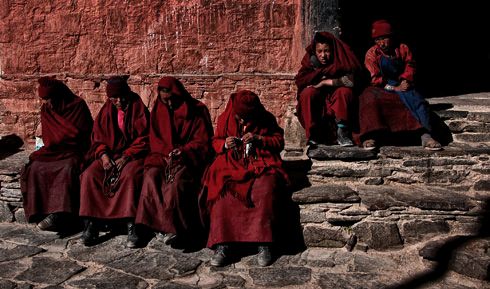 Tibetan Buddhism has generated centuries of impressive arts and architecture. Visits to monasteries are an integral part of a visit to Tibet. Deeply religious, Tibetan are an open, spontaneous people with a good sense of humour. Lhasa, the capital city, is also the cultural and economic center of Tibet where you find the magnificent Potala Palace (Winter Palace of his Holiness the Dala Lama), the holiest Jokhang Temple, Drepung and Sera Monasteries, which once had 18,000 monks and Norbulinkha (Summer Palace of the Dalai Lama).